

A successful home remodel is planned before construction begins. Homeowners who define clear goals, set a realistic budget with contingency, gather accurate project details, and select the right contractor early are significantly less likely to experience delays, cost overruns, or design regrets.
Remodels often start with high hopes and end with frustration. Most of the time, it’s not bad luck—it’s bad planning. Missed details, vague budgets, unclear goals, and a weak contractor process derail even the simplest remodel. If you want control over your time, money, and sanity, it starts here.
Before numbers or paint colors, you need clarity. This section gets into how to define the real reason you’re remodeling and what success looks like for your home.
You’re not remodeling just for fun. Something’s not working. It might be due to layout, lack of space, outdated finishes, poor lighting, or poor flow. You need to name that. Write it down.
This clarity keeps your project focused. You’ll avoid distraction later—especially when design trends and shiny options come into play.
Once you know your goals, the next step is to match them with a budget that doesn’t collapse when reality hits.
Setting a usable budget means planning for quality and surprises. This part breaks down how to do that without guessing.
Start with general cost ranges. Research remodeling costs in your area for your project type—kitchen, bathroom, or whole house. Use that as a baseline, not a limit.
If you want real price ranges for bathroom remodel cost in Indiana, including what actually drives the total, read Bathroom Remodel Cost in Indiana: Real Price Ranges and What Changes the Total.
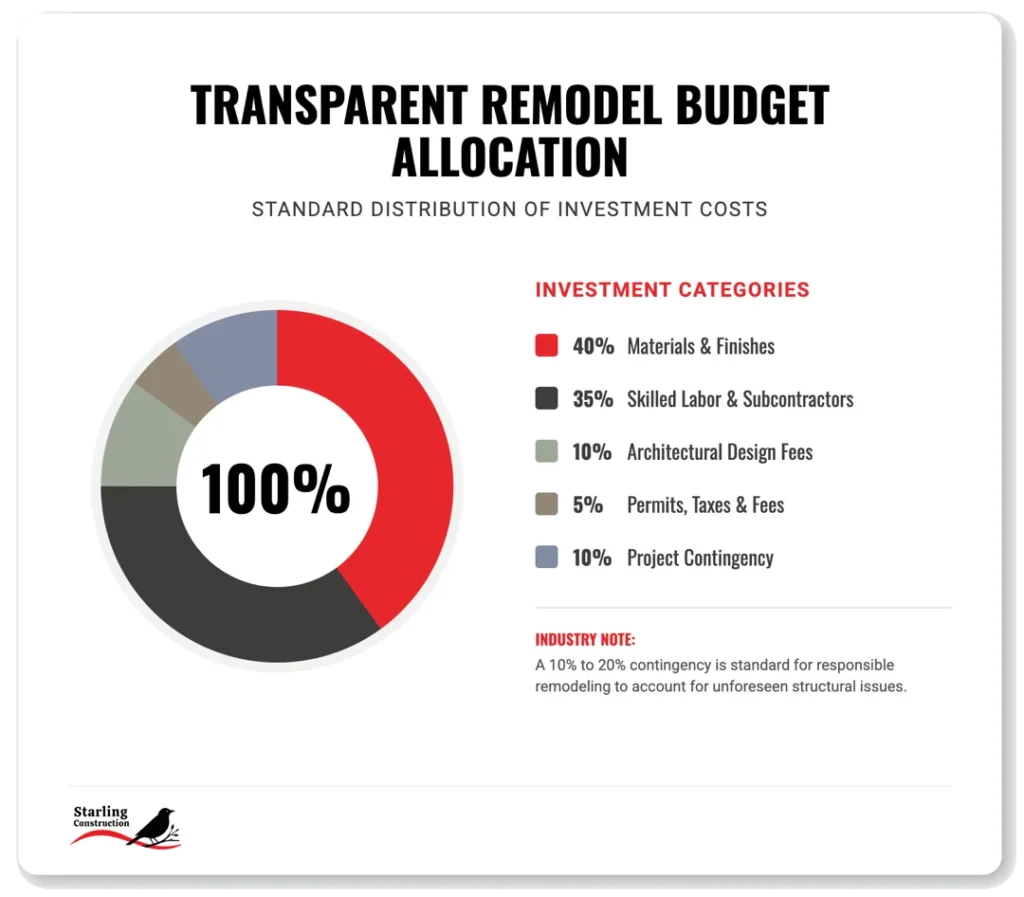
Only about 36% of homeowners hit their remodel budgets, while 31% went over. Another 16% of projects exceed budgets significantly, often due to poor planning and scope creep.
A realistic budget doesn’t box you in—it gives you room to make smart calls when things shift.
Next, let’s discuss the prep work that most homeowners skip, but pros always appreciate.
Measurements, photos, and reference images do more than help you visualize—they keep your contractor’s quote accurate. This section explains what to gather and why.
Before you reach out to anyone:
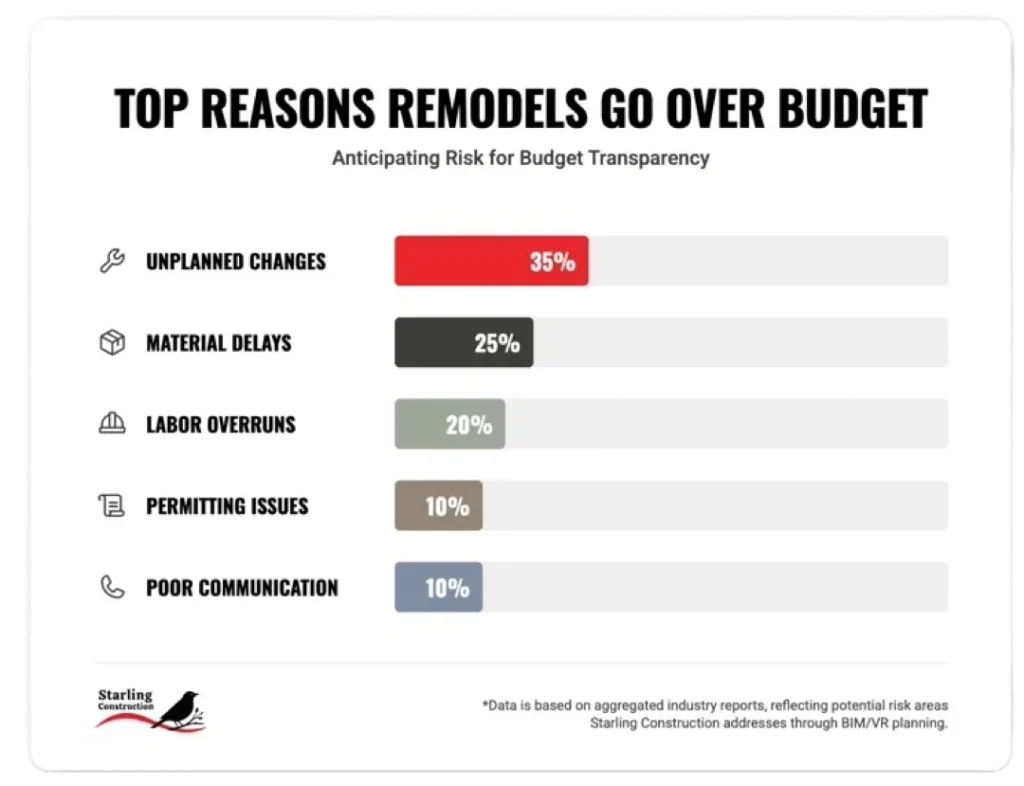
Materials (58%) and labor (40%) are the top drivers of cost overruns—and both are avoidable with better prep.
You don’t need design software—just legible sketches and photos. The more info you give, the faster and better your contractor can scope your project.
And now that you’re prepared, let’s talk about how to choose the person you’re trusting with your home and money.
Picking a contractor is where most remodels go off the rails. This part shows you what to look for beyond the quote.
Price matters, but it’s not the full story. Ask each contractor:
Poor communication causes one-third of project failures—so pay attention to how clearly they talk about their process.
If you’re chasing answers now, you’ll be chasing accountability later. So what does a good process actually look like?
Most people don’t know what they’re walking into when they plan a remodel. Here’s what we cover in a Starling consultation and why it sets your project up for success.

We start with your goals—what you need, what you want, what you don’t want. Then we map those to your budget range and show you what’s possible.
The goal is to eliminate the guesswork—before you spend a dollar on permits or demolition.
And that brings us to one of the most overlooked planning advantages.
Waiting to plan is expensive. This section explains why making early decisions saves you time and money over the long term.
Americans spent an estimated $603 billion on remodeling in 2024. Larger projects are on the rise, and most problems arise when planning is skipped.
Time equals money, and the earlier you make big decisions, the less you’ll spend reacting later.
Time equals money, and the earlier you make big decisions, the less you’ll spend reacting later.
| Planning Mistake | Likely Outcome |
|---|---|
| Starting construction without finalized selections | Delays, rush fees, and change orders |
| Underestimating budget | Scope cuts or unexpected out-of-pocket costs |
| Skipping professional input early | Design revisions and structural corrections mid-project |
| Ignoring permit timelines | Work stoppages and rescheduling trades |
| Late material decisions | Extended timelines due to backorders |
And in some projects, planning early also means bringing in the right specialists.
Not every remodel needs an architect. Some definitely do. This section explains when to bring in extra help.

| Project Situation | Removing or modifying load-bearing walls |
|---|---|
| Updating layout, finishes, or lighting | Designer |
| Visualizing complex spaces before construction | Designer |
| Removing or modifying load bearing walls | Structural engineer |
| Adding square footage or new floors | Structural engineer |
| Permit requirements for engineered drawings | Structural engineer |
Call in a designer if:
Call in a structural engineer if:
These pros catch issues early and prevent expensive mid-project corrections. If you’re unsure, ask during your consultation with your contractor or Starling.
If you are feeling unsure about timelines, budgets, or where to start, you are not alone. These are the most common questions homeowners ask when planning a remodel, along with clear answers that help eliminate surprises later.
Most successful remodels begin planning at least two to six months before construction starts. This allows time for design decisions, material lead times, permits, and contractor scheduling without unnecessary pressure.
Yes. Even well-planned remodels can uncover hidden issues like outdated wiring or plumbing. Setting aside ten to twenty percent of your budget helps cover surprises without derailing the project.
Absolutely. Early planning reduces rushed decisions, avoids change orders, and allows contractors to sequence work efficiently, which lowers labor and material costs.
In many cases, yes. Contractor input early in the process helps ensure your design is realistic for your budget, timeline, and local permitting requirements.
Delays are most often caused by late decisions, long material lead times, permit issues, and scope changes made after construction begins.
Remodels don’t fail because of bad luck—they fail because of poor planning. A good consultation turns vague ideas into clear steps with budgets, timelines, and expectations.
If you’re ready to take control of your remodel, start by booking your consultation with Starling. We’ll walk you through it, line by line, so that you can move forward with confidence. Fill out the form below to get started today.