
For most homeowners, bathroom remodel costs in Indiana range from $8,000 to $35,000+, with primary suites often higher when you change the layout, rebuild the shower, or address subfloor damage. Central Indiana labor demand and older-home structure details drive the spread as much as finishes do. Use the tiers and cost drivers below to set a budget aligned with your scope, rather than guessing.
TLDR
If you want to compare scope options, start with our bathroom remodeling page to see what we include at each level.
Want a real number tied to your exact scope and finish level? Request a bathroom remodeling quote based on your layout, selections, and what we find behind the walls. Fill out the form for your free quote today.
Central Indiana reality check: homes in Lafayette and West Lafayette can hide older framing, uneven floors, and patched plumbing. In Frankfort, we often see builder-grade baths where upgrades look simple until you open the wet wall. Those conditions do not appear in national averages, but they do appear on invoices.
Want to see what a clean, efficient refresh looks like? View our Bathroom Refresh in West Lafayette project images below:
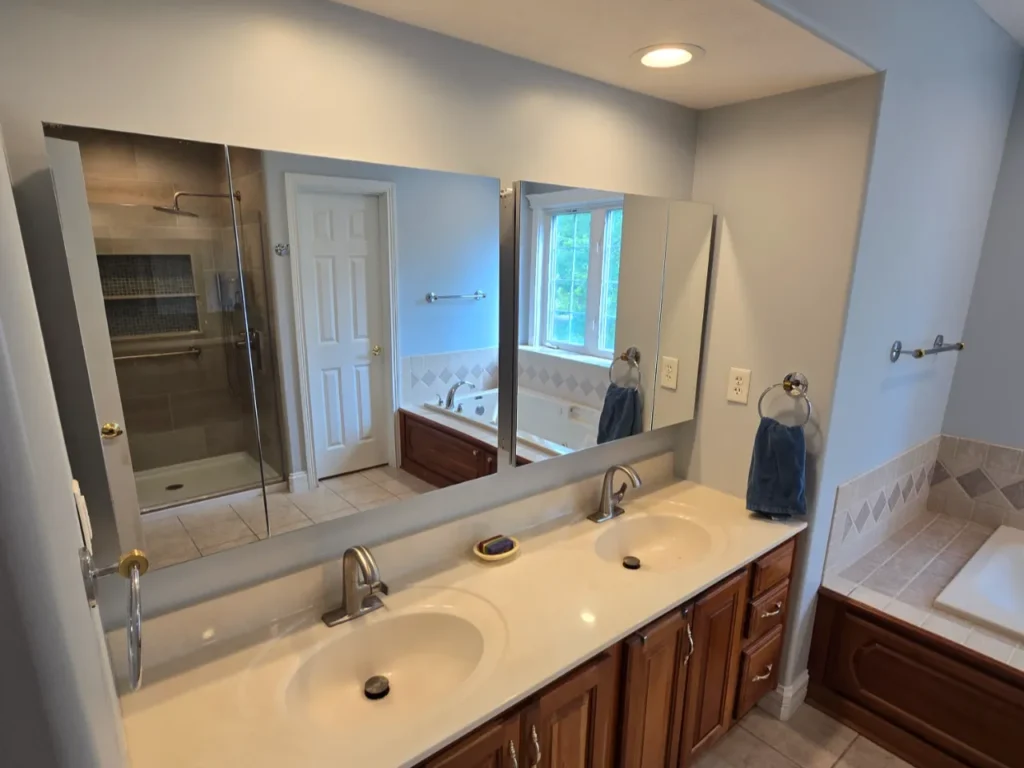
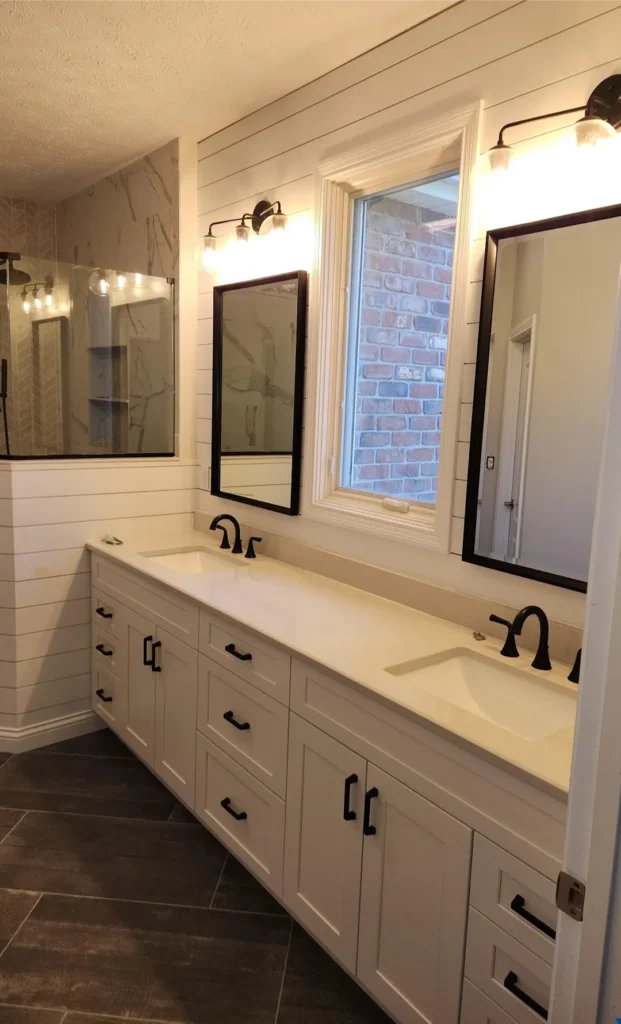
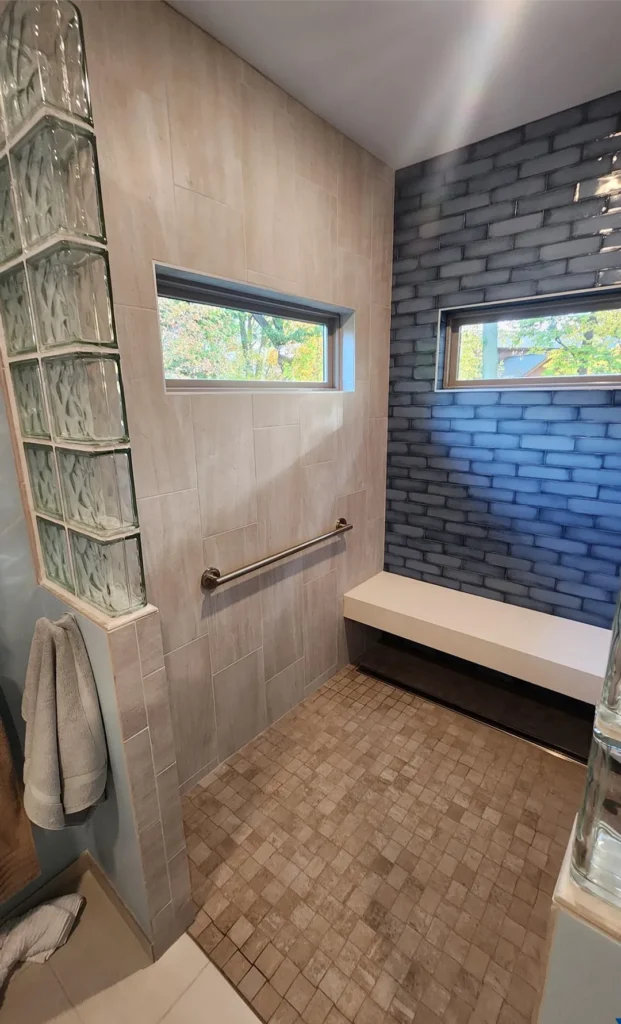
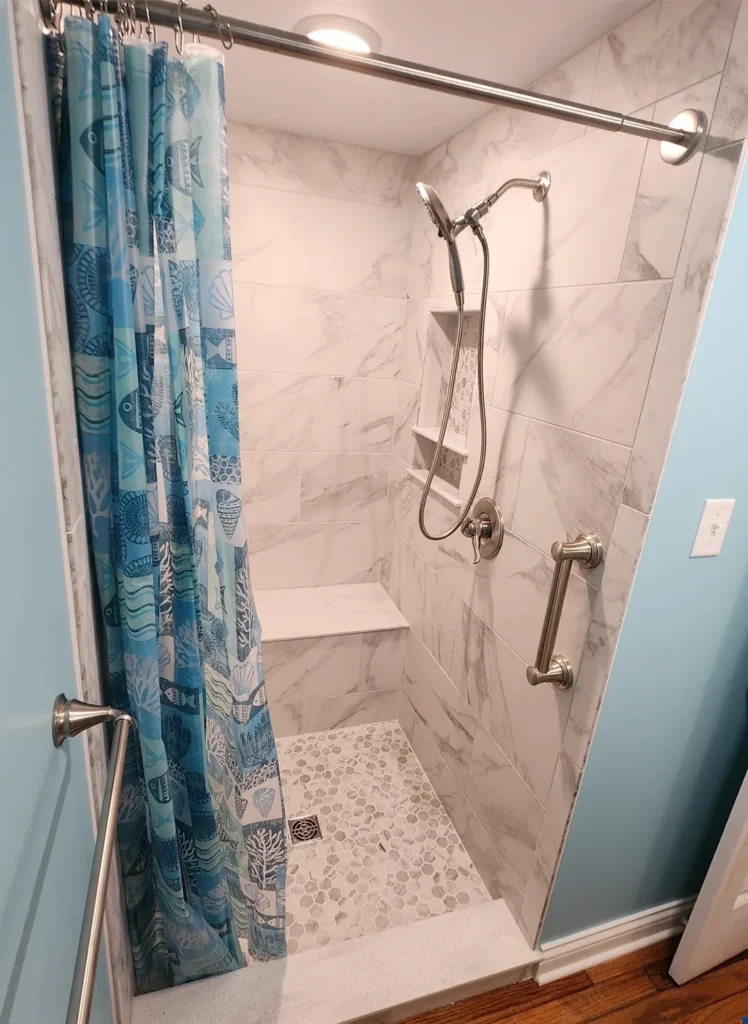
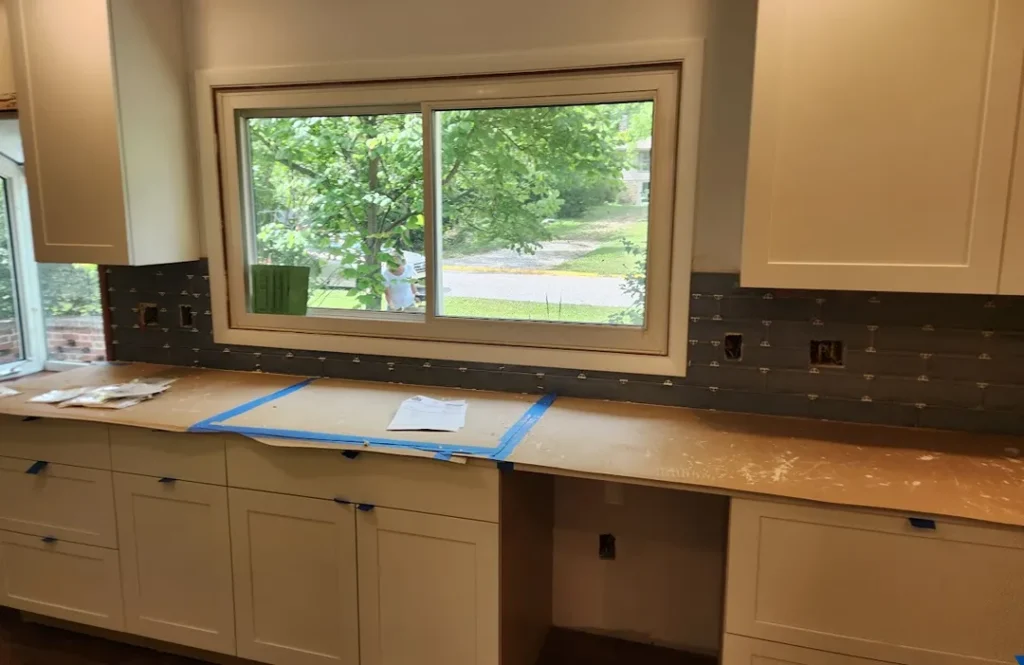
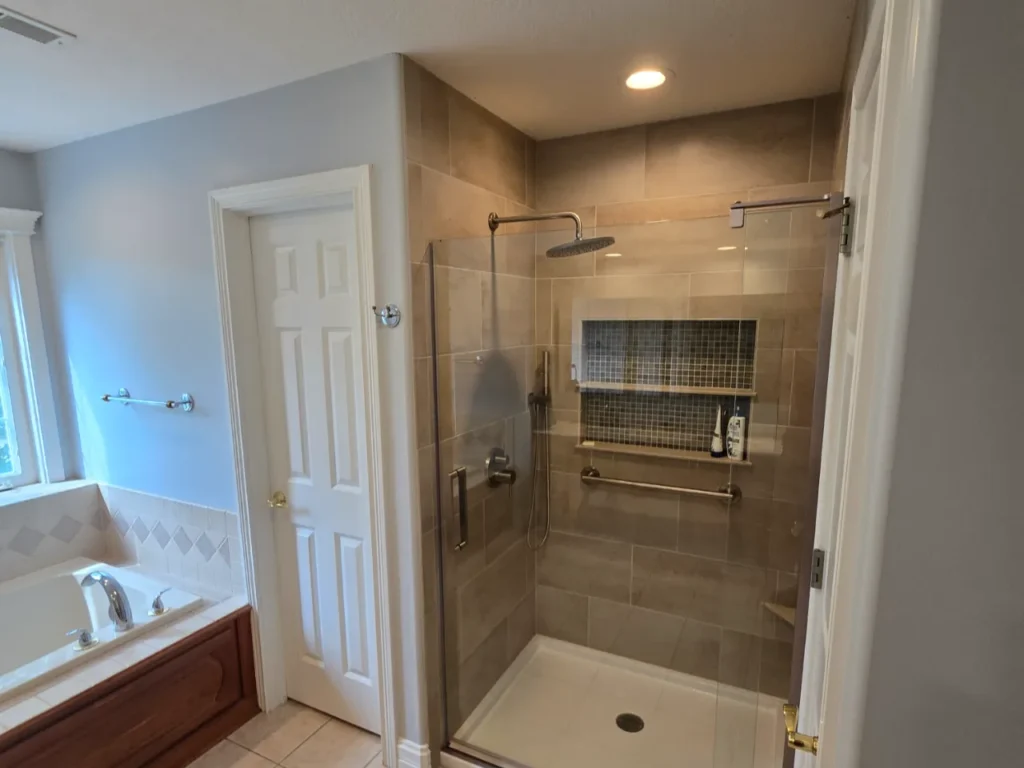
These tiers align with what homeowners most often request: a light refresh, a standard full-bath update, or a full primary-suite rebuild with custom wet-area work. Indiana examples published by local design-build firms closely align with national datasets after adjusting for scope. (According to Benjamin Design Build and HomeAdvisor.)
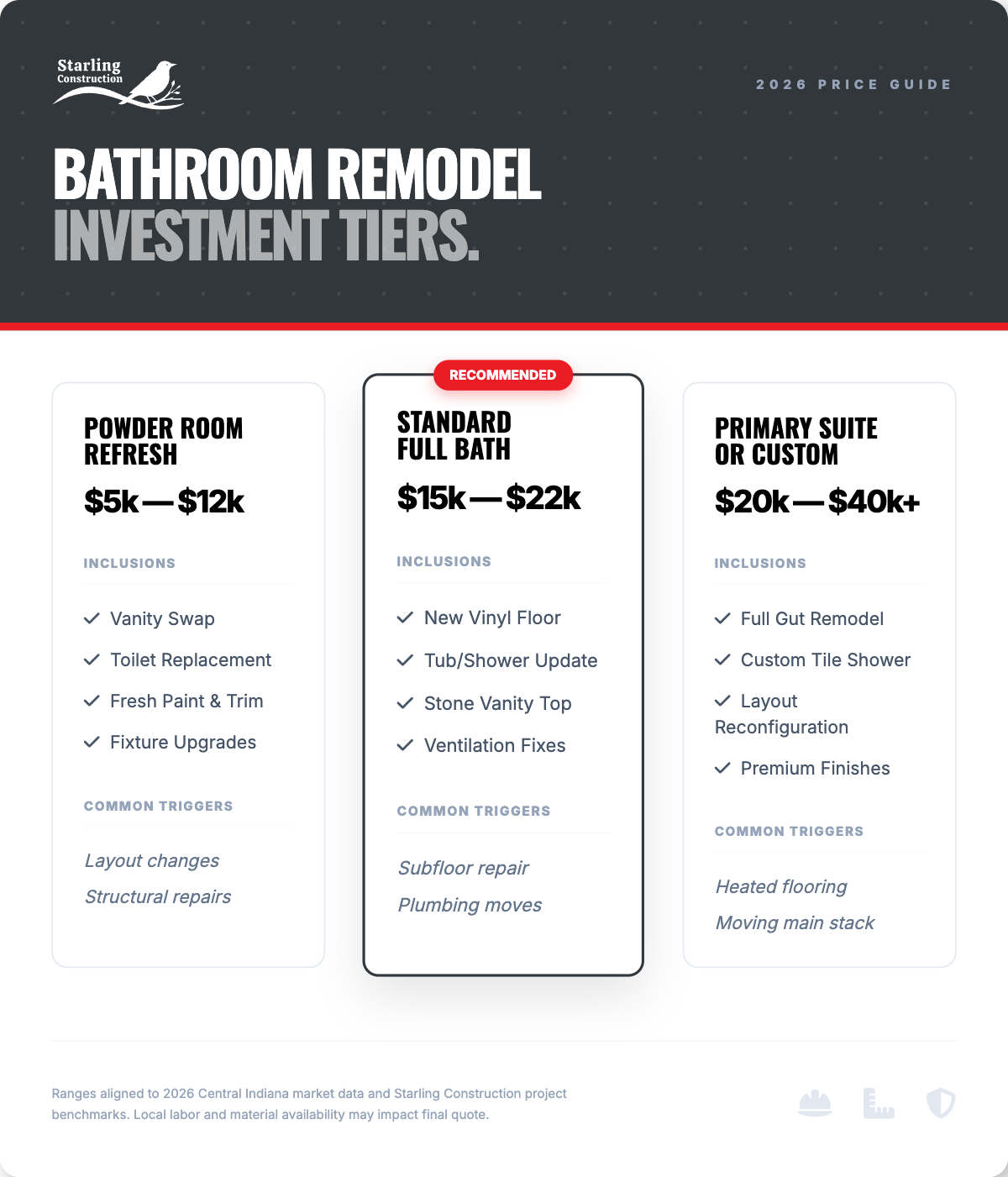
| Tier | Range | Included | Often Added |
| Powder Room Refresh | $5k to $12k | Vanity swap Toilet replacement Fresh paint and trim Fixture upgrades | Layout changes Structural repairs |
| Standard Full Bath | $15k to $22k | New vinyl floor Tub or shower update Stone vanity top Ventilation fixes | Subfloor repair Plumbing moves |
| Primary Suite Or Custom | $20k to $40k+ | Full gut remodel Custom tile shower Layout reconfiguration Premium finishes | Heated flooring Moving main stack |
If your main goal is upgrading the wet area without a full gut, shower and bath conversions can be a smarter path.
Cost per square foot helps you sanity-check a budget, but bathrooms break the rule that “bigger costs more.” Plumbing and electrical work can cost nearly the same in a 40-square-foot bath as in a 70-square-foot bath, so smaller rooms often look “more expensive” per square foot. (According to Angi.)
A 100-square-foot bathroom at $170 per square foot would cost $17,000 before repairs and upgrades. If demolition reveals a damaged subfloor or you switch to a custom tile shower with a full waterproofing system, the number increases quickly.
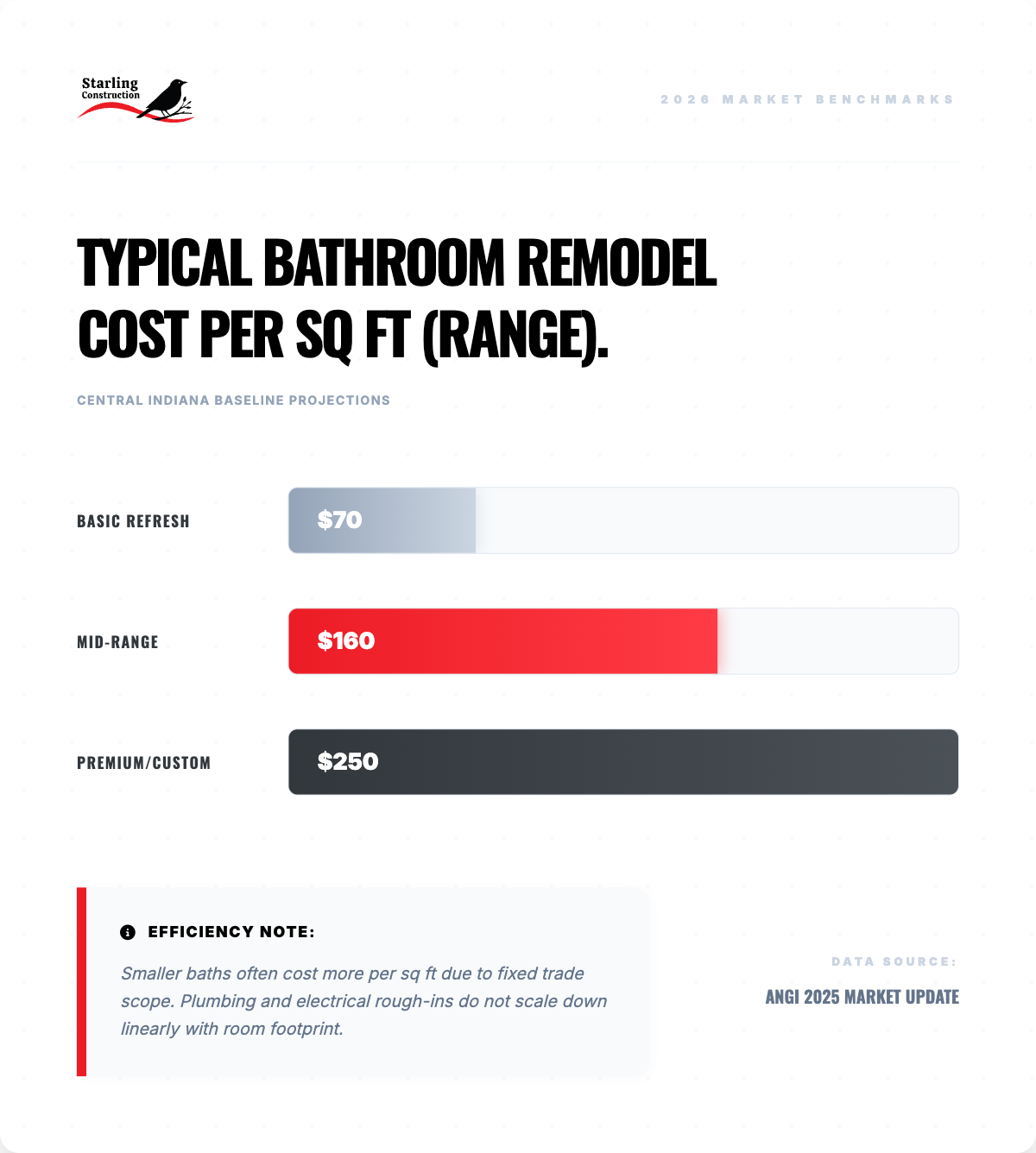
The above numbers are based on a 10’ x 10’ bathroom and are a starting point only.
Tile prep and installation time drive costs quickly, so review our tile and flooring service details before you lock in selections.
If you want control over the bathroom remodel cost in Indiana, focus on the drivers that change labor hours and inspection needs. Finishes matter, but layout and wet-area complexity usually matter more.
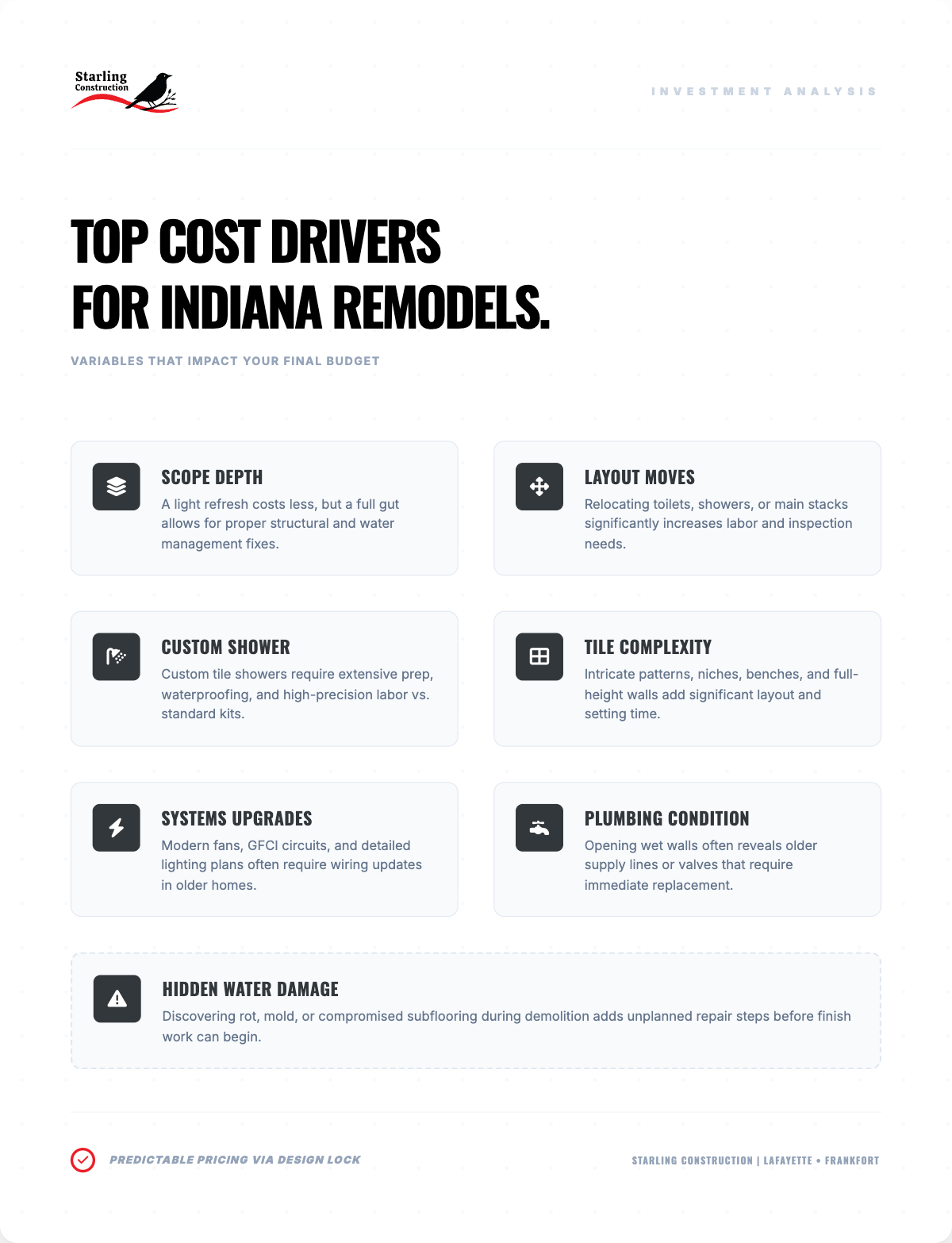
Most homeowners underestimate labor because they picture “installing stuff” and forget demolition, prep, waterproofing, and rough-in coordination. Industry cost datasets regularly show labor as the largest single share of a bathroom remodel. (According to HomeAdvisor and Angi.)
| Category | Typical Share | Notes |
| Skilled Labor | 40% to 65% | Demolition, framing, tile setting, plumbing rough-in, electrical, finish install. |
| Materials and Finishes | 30% to 45% | Vanities, fixtures, tile, waterproofing components, lighting, mirrors, paint. |
| Permits and Disposal | 5% to 10% | Fees vary by jurisdiction and scope, plus haul-off and dump charges. |
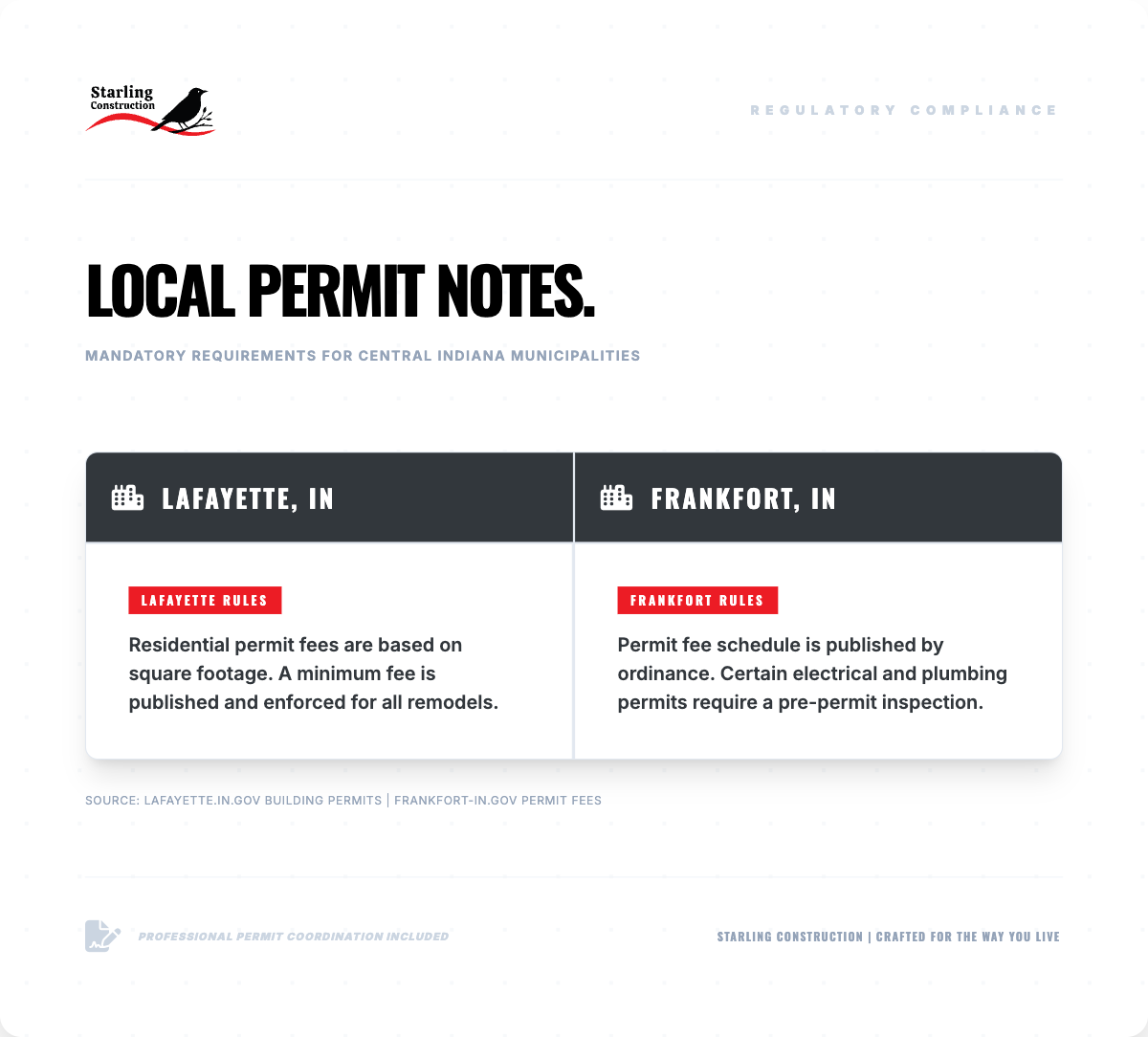
If you work on plumbing, electrical, or structural work, plan for permits and inspections. In Lafayette, the city lists residential permit fees on a square-foot basis, with a minimum fee. (According to City of Lafayette Building Permits.) In Frankfort, the city publishes a permit fee schedule adopted by ordinance, and some permits require a pre-permit inspection. (According to City of Frankfort Permit Fees.)
Bathrooms also live and die by moisture control. Ventilation rules are set in the International Residential Code, and the code body and commentary on mechanical ventilation have changed meaningfully in recent cycles. (According to ICC Safe analysis of IRC ventilation changes).
You can plan finishes all day, but your budget lives or dies on the boring stuff: what you are changing, what you are not, and what the demo reveals. Use this section to lock scope first, then pick upgrades that fit the plan so you do not turn a clean mid-range project into an expensive surprise.
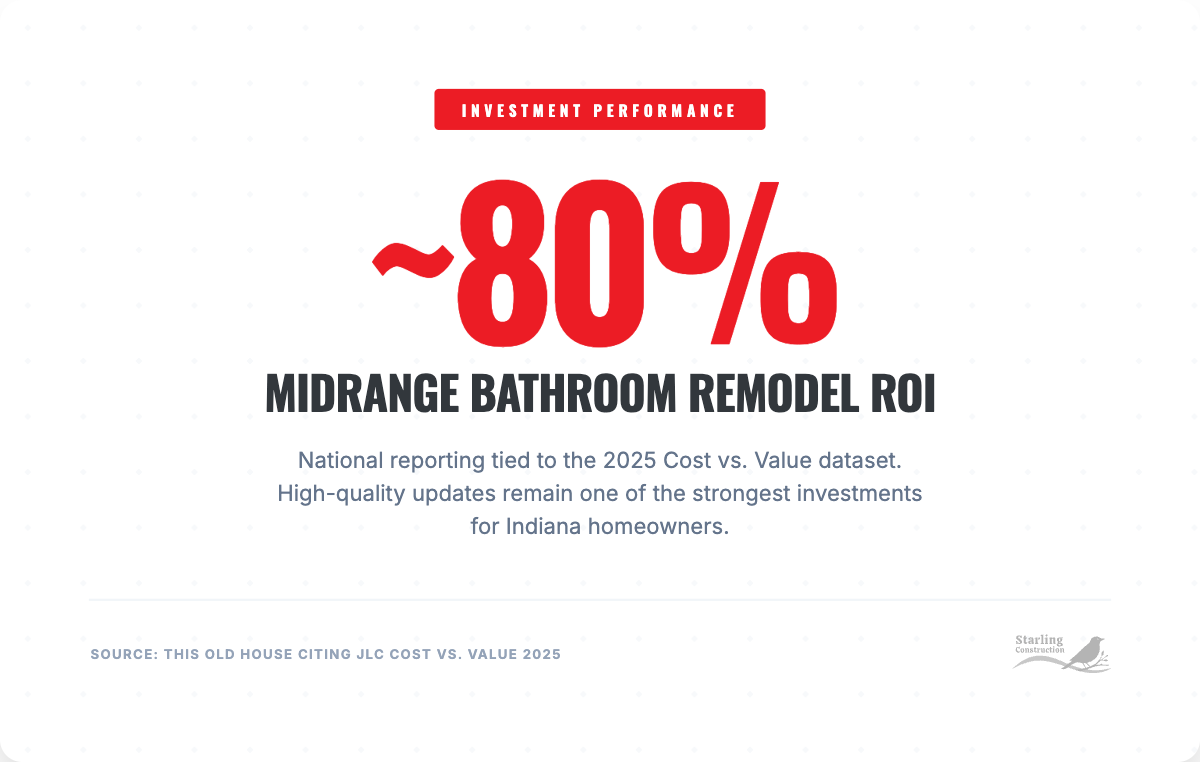
Bathrooms typically return a meaningful share of cost at resale, but ROI depends on price point and neighborhood expectations. National reporting tied to the 2025 Cost vs. Value dataset often cites an ROI of about 80% for a midrange bathroom remodel. (According to This Old House, citing the 2025 Cost vs. Value Report (JLC)).
These are the questions we hear most often from homeowners trying to determine bathroom remodel costs in Indiana. Use the answers below to avoid the common budget traps: hidden water damage, surprise permit needs, and layout changes that quietly add thousands.
If you make changes to plumbing, electrical, ventilation, or structural systems, you usually need permits and inspections. Cities and counties set fees and submittal rules, so the right answer depends on where you live and what you change. Lafayette publishes residential permit fee rules and minimums, and Frankfort publishes a fee schedule adopted by ordinance. (According to Lafayette and Frankfort.)
Labor usually leads because bathrooms require multiple trades in a small space: demolition, framing, plumbing, electrical, waterproofing, tiling, and finish work. Big jumps come from layout moves, custom showers, and repair work found after demolition. Labor shares of 40% to 65% recur frequently in large cost datasets. (According to HomeAdvisor and Angi.)
A simple powder room can finish in 1 to 2 weeks once materials are on site. A full bath often runs 3 to 6 weeks. Primary suites and custom showers take longer, especially when inspections, specialty tile, or repairs are involved. The schedule depends less on room size and more on the scope of the wet area and how early you lock in selections.
Yes. Keeping the toilet, tub or shower, and vanity in the same location reduces plumbing rough-in labor and avoids additional framing openings. You also reduce inspection complexity by involving fewer systems. If your current layout works, you can invest in shower quality, lighting, and storage instead of paying to relocate drains and vents.
Keep the layout, choose midrange fixtures, and limit tile to where water hits. Spend on waterproofing, ventilation, and subfloor prep, because those failures cost real money later. For layout and clearance planning, follow established kitchen and bath design guidance to avoid creating a tight space that feels awkward forever.
Many midrange bathroom remodels deliver a strong resale return, but ROI declines when you overbuild for the neighborhood. National reporting tied to the 2025 Cost vs. Value dataset often cites an ROI of around 80% for midrange bathroom projects, with variation by market. Use ROI as a sanity check, not the only reason to remodel.
Ready to pin down your bathroom remodel cost in Indiana with real scope and real selections? Request a bathroom remodel quote, and we will map out the plan, budget, and build sequence.
Fill out the form below to get your free quote: