
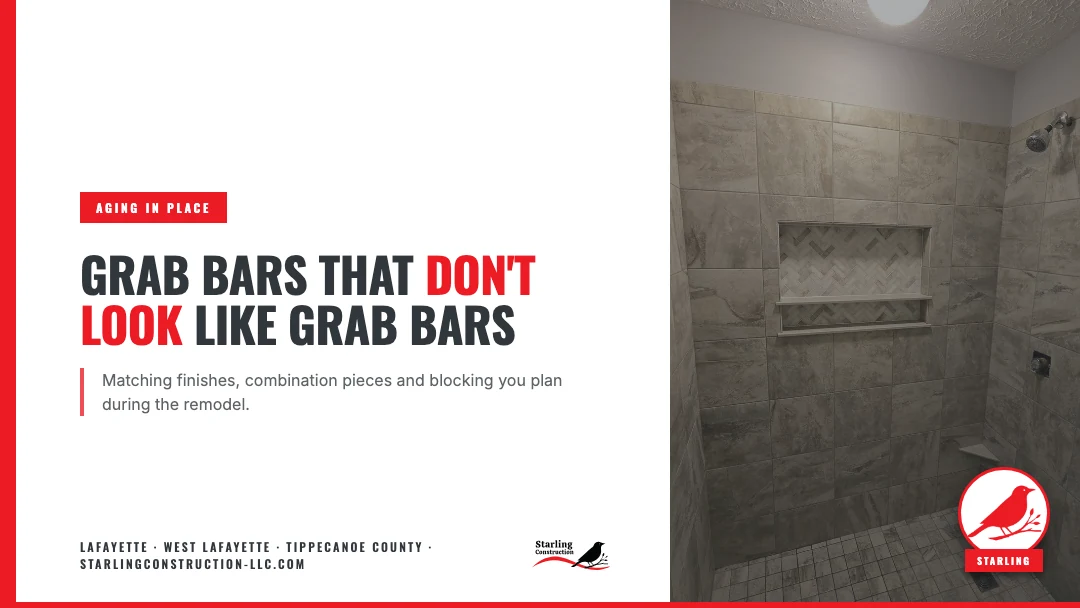
Quick answer: Choose bars in the same finish as your faucet and shower trim, use combination pieces that double as towel bars, paper holders or shower shelves, and plan solid blocking in the walls before tile goes up. A real grab bar is still rated to hold your weight. HomeGuide’s 2026 data puts installation at $100 to $350 per bar.
Across Frankfort, Lafayette, West Lafayette, Lebanon and Kokomo, a lot of bathroom projects start with someone who no longer trusts the tub, or a parent moving in. The worry that follows is almost always the same: will safety features make the room look like a hospital?
They don’t have to. The parts that keep a grab bar safe are hidden behind the wall, and the part you see can look like any other fixture in the room.
Planning a safer bathroom that still looks like your home? We will look at the walls, the fixtures and where the bars need to go, and tell you what it takes before any tile comes down.
Most people picture grab bars for someone who already has trouble getting around. The injury numbers make a case for adding them sooner.
A CDC report on bathroom injuries estimated 234,094 emergency room visits for bathroom injuries among people 15 and older in 2008. Falls caused 81.1% of them, and the rate climbed with age, peaking for people 85 and older.
Those two spots, the shower and the toilet, are where grab bars do the most good. They are also the spots where a well-chosen bar can look like it was always part of the design.
Before getting into looks, it helps to know what separates a grab bar from a towel bar that happens to be in the right place. The difference is all about strength.
A towel bar is made to hold a towel. When someone slips and grabs it, the bar or the drywall anchors can pull right out of the wall. A grab bar is made and mounted to take the full force of a person catching their balance.
The 2010 ADA Standards are a good reference even though they cover public buildings, not private homes. They test a grab bar, its fasteners and the wall behind it at 250 pounds of force, and they call for a round bar 1-1/4 to 2 inches across with 1-1/2 inches of space from the wall, so a hand fits around it. Our walk-in shower guide covers the full set of shower and grab bar dimensions.
Whatever style you choose, check three things on the box: that it is sold as a grab bar, that it lists a weight rating, and what it needs behind the wall to reach that rating.
This is where design comes in. None of these ideas weaken the bar. They change how it reads in the room.
1. Match the finish to your fixtures. A grab bar in the same matte black, brushed nickel or polished chrome as your faucet and shower trim looks like part of a set, not an add-on. Pick the bars when you pick the fixtures, so the finishes come from the same line.
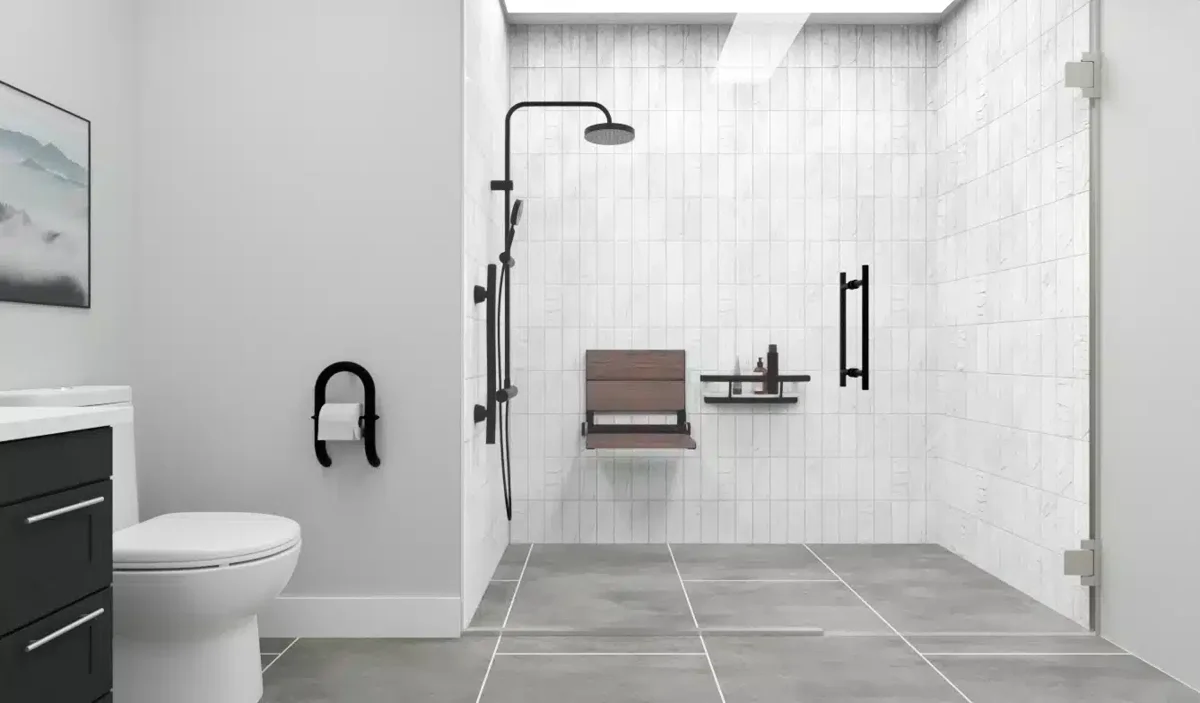
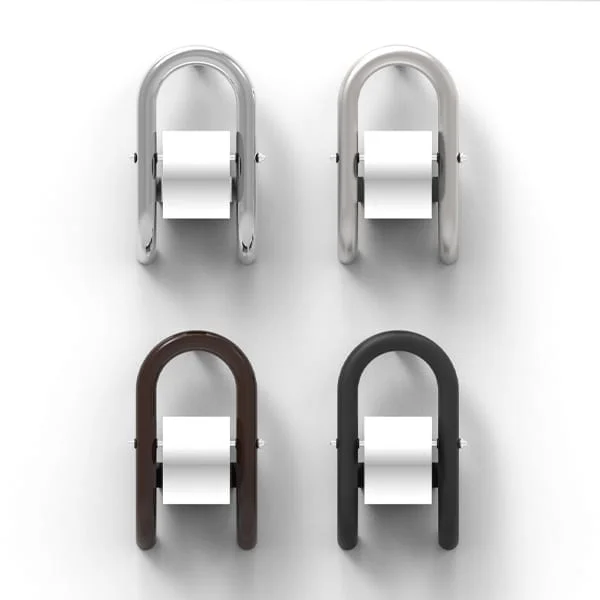
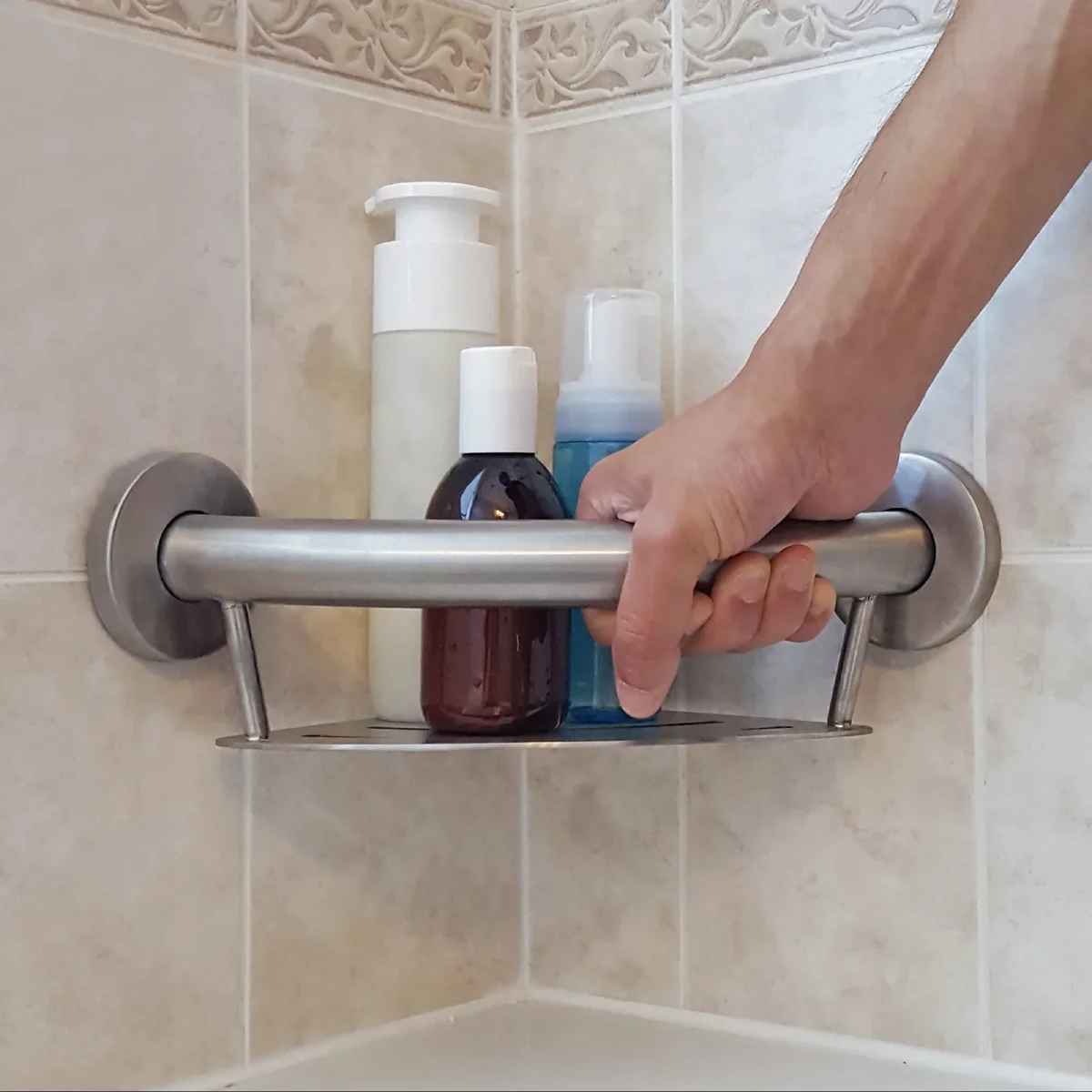
2. Use combination pieces. Several manufacturers make grab bars that double as a towel bar, a toilet paper holder or a shower shelf. A paper holder with a grab bar built in is one of the easiest wins next to a toilet, because it fills a spot that already needs hardware.
3. Let the bar follow a design line. A horizontal bar that lines up with a tile band, a niche or the top of a shower bench reads as a deliberate detail. A bar set at a random height on a plain wall is what makes a bathroom look clinical.
4. Put the bar where a hand naturally goes. A vertical bar at the shower entry is where most people already reach for the wall or the door frame. Placed there, it gets used without anyone thinking of it as a safety device.
5. Keep the count honest. Two or three well-placed bars in a matching finish look cleaner than a wall full of mismatched ones. Plan the spots around how the person actually moves through the room.
| Where it goes | Piece that blends in | What to check |
|---|---|---|
| Next to the toilet | Paper holder with a built-in grab bar | Sold and rated as a grab bar |
| Shower entry | Vertical bar in the fixture finish | Anchored into blocking or a stud |
| Inside the shower | Shelf or niche ledge with a grab bar | Rated for weight, not just storage |
| Beside the tub | Towel bar that is also a grab bar | Weight rating on the packaging |
| Along a bench | Horizontal bar lined up with the tile | Height you can reach while seated |
The table is a starting point. The right spots depend on the person using the bathroom, which is why we look at the room in person before recommending a layout.
Want grab bars that match the rest of the bathroom? We can plan the bars, the finishes and the blocking as part of one bathroom project and give you a clear price up front.
The most important part of a grab bar is the part you never see. A bar is only as strong as what it is screwed into.
Blocking is solid wood set between the studs behind the drywall or tile backer. It gives a grab bar something to bite into anywhere along the wall, not just where a stud happens to fall. Adding it while the walls are open costs little, and it is far more work after tile is installed.
Manufacturers say the same thing. HealthCraft rates its Plus corner shelf at 500 pounds only when it is secured to structurally sound walls, and its instructions say to add wood blocking where that structure is missing.
The ADA standards point the same way. In residential dwelling units, they allow grab bars at the tub to be left off for now as long as the walls are reinforced, so bars can be added later. That is a good approach for a home, too. If you are remodeling a bathroom now, ask for blocking in the shower, beside the toilet and at the tub, even if nobody needs grab bars yet.
Older homes around Lafayette and Frankfort add a wrinkle: plaster walls, uneven framing and old tile can hide what is behind the surface. Our guide to remodeling a bathroom in an older Lafayette home covers what to expect once the walls open up.
Grab bars are one of the less expensive safety upgrades in a bathroom. The bigger cost question is the wall behind them.
HomeGuide’s 2026 grab bar cost guide puts installation at $100 to $350 per bar, with the bar itself running $20 to $150 and labor $80 to $200. Most people add 2 to 4 bars near the toilet, tub or shower.
| Item | HomeGuide 2026 range |
|---|---|
| Grab bar only | $20 to $150 |
| Labor per bar | $80 to $200 |
| Installed, per bar | $100 to $350 |
| Typical number of bars | 2 to 4 |
Designer finishes and combination pieces sit at the higher end of the bar price. HomeGuide also notes that installing through porcelain or stone tile can add to the labor, which is one more reason to put the blocking in before the tile.
For some families, grab bars can count toward medical expenses on a tax return. It is worth a look before you buy.
IRS Publication 502, for 2025 returns, lists adding handrails or grab bars anywhere in the home, in the bathroom or out of it, among home changes made for a medical reason that can be included in full as medical expenses. The rules depend on your situation, so check with a tax professional before counting on it.
A good grab bar plan starts with the person, not the catalog. We look at how they get in and out of the shower, where they reach for support today and which walls can take blocking.
From there, grab bars become part of the design: matched to the fixtures, placed along the lines the room already has, and backed by solid framing. If you are planning a bigger change, our aging-in-place remodeling work covers showers, doorways and the rest of the home, and our bathroom remodeling projects can build the blocking in from day one.
These are the questions that come up when families start planning grab bars. If yours is not here, call us at 765-237-9420.
Not unless it is sold and rated as a grab bar. A standard towel bar and its drywall anchors are not made to hold a person’s weight and can pull out of the wall in a fall. Some combination pieces are both, so check the packaging for a weight rating before trusting any bar.
The 2010 ADA Standards, which cover public buildings, test grab bars and their mounting at 250 pounds of force applied at any point. Homes are not required to meet that standard, but it is a sound benchmark. The bar’s rating only counts if it is anchored into blocking, a stud or hardware rated for the wall.
Start where injuries happen most. The CDC found about two thirds of bathroom injuries occur in the tub or shower, and 23.4% at the toilet. A vertical bar at the shower entry, a bar inside the shower and one beside the toilet cover the main spots for most people.
Yes, but it is harder. Without blocking, the installer has to find studs or use anchors rated for hollow walls, and drilling through porcelain or stone tile adds labor. If you are remodeling now, adding blocking while the walls are open makes future grab bars simple and much cheaper.
HomeGuide’s 2026 cost guide puts it at $100 to $350 per bar installed, with the bar itself at $20 to $150 and labor at $80 to $200. Most homes add 2 to 4 bars. Designer finishes, combination pieces and tile or stone walls push the cost toward the top of the range.
They can be. IRS Publication 502 lists adding handrails or grab bars anywhere in the home among changes made for a medical reason that can count as medical expenses. If you can deduct them, it depends on your situation, so check with a tax professional before you plan around it.
Grab bars work best when nobody notices them until they need one. Match the finish, use pieces that do double duty, and put solid blocking behind every spot a bar might go.
If you would like to see how that could look in your bathroom, browse a finished West Lafayette bathroom from our portfolio, then reach out to plan yours.
Ready to plan grab bars that fit your bathroom? We will walk the room with you, plan the blocking and finishes and give you a clear price with no surprises.