
Quick answer: For a kitchen that gets real use, porcelain or glazed ceramic tile with a stain-resistant grout is the easiest backsplash to live with. Natural stone can work, but marble and limestone etch from acids like lemon and vinegar. Quartz slabs make a seamless full-height backsplash but are not heat-proof. The grout often decides how a tile backsplash ages.
The backsplash is one of the most visible parts of a kitchen, so it is easy to choose it the way you choose paint: by color and style. But it is also one of the hardest-working surfaces in the house, sitting right behind the sink, the cutting board and the stove.
The good news is that most materials can work. The difference is how much care they need. This guide covers how each option holds up, why the grout matters so much, and what has to be planned behind the wall.
Choosing materials for a kitchen remodel? We will help you pick a backsplash that fits how you cook, and plan the outlets and details behind it before any tile goes up.
A backsplash near the sink sees water every day. Behind the stove, it sees grease and heat. Along the prep counter, it catches splashes of tomato sauce, lemon juice and coffee.
That mix of water, oil and acid is what separates a backsplash that still looks new in ten years from one that looks tired in two. Each material handles those three differently.
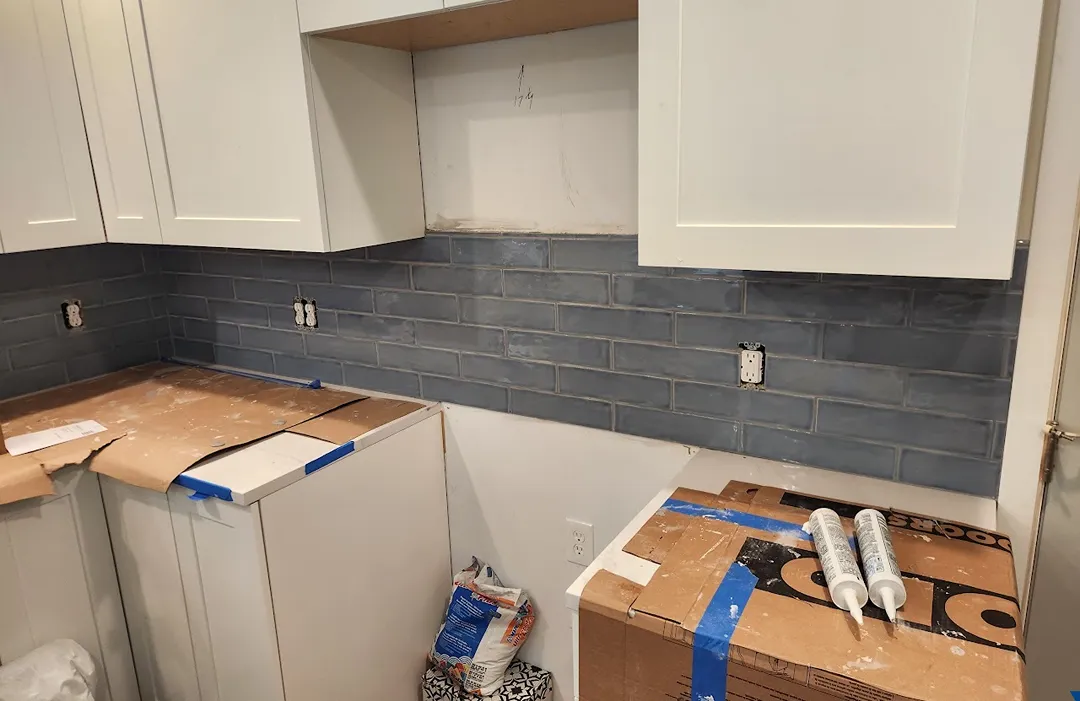
Tile is the most common backsplash choice, and the two main types behave differently. The Tile Council of North America explains that “standards define porcelain tile as an impervious tile with a water absorption of 0.5% or less.” Non-porcelain tiles absorb more than 0.5%.
Not every tile sold as porcelain meets that bar. TCNA notes that some tile is advertised as porcelain without meeting the standard, and that “if a tile carries the Porcelain Tile Certification Agency (PTCA) mark, it has been certified as true porcelain.”
For ceramic tile, the glaze does most of the protecting. TCNA says “the glaze layer can be extremely durable,” but that glazes differ, so it is worth checking the tile has been tested. It adds that glazed porcelain is “usually a little easier to clean” than unglazed.
On many tile backsplashes, the grout lines show stains before the tile does. The grout you choose matters as much as the tile.
TCNA’s grout cleaning guidance says cement-based grout “is porous” and can absorb a stain, while epoxy grout “is virtually as stain proof as the tile.” It adds that “sealer is a very good idea for cementitious grout.”
Epoxy grout removes the sealing step. LATICRETE’s SPECTRALOCK PRO data sheet, for example, says the grout “never needs sealing” and that “maximum stain protection is achieved in seven days” at 70°F.
Cleaning matters as well. TCNA warns that cement grout “is alkaline based and is dissolved by acids,” and compares it to baking soda reacting with vinegar. It recommends alkaline cleaners over acid-based ones, and says not to use oil or wax-based cleaners.
Want a backsplash that stays clean with less work? We will walk you through tile and grout options side by side, including where epoxy grout is worth it.
Stone backsplashes can be stunning, but the type of stone decides how much care they need. The Natural Stone Institute divides stone into two families.
Calcareous stones such as marble and limestone are made mostly of calcium carbonate, which is sensitive to acids. The institute says “products containing lemon, vinegar or other acids may dull or etch calcareous stones.” Siliceous stones such as granite and quartzite are “generally resistant to most acids found in kitchen settings.”
Sealing helps but does not make stone stain-proof. The institute says “sealing does not make the stone stain proof, rather it makes the stone more stain resistant,” and that many stones do not require sealing at all. In a kitchen, it adds, any sealer should be “non-toxic and safe for use” near food.
Engineered quartz is popular for full-height backsplashes that run from the countertop to the cabinets or ceiling with no grout lines. It needs its own care.
Manufacturer Cambria’s care guidance says its product “is not heat-proof, chemical-proof, or fracture-proof in any form,” and that owners should not apply “any sealers, penetrants, or topical treatments.” It lists cleaners to avoid, including bleach and oven cleaners, and notes that 1 cm thickness is for “vertical surface finishes such as walls and full-height backsplash.”
One safety note concerns the people who make it, not the people who live with it. OSHA and NIOSH warn that silica exposure is a health hazard to workers “involved in manufacturing, finishing, and installing natural and engineered stone countertop products,” in fabrication shops and during on-site finishing. Ask any fabricator how they control dust.
A new backsplash almost always means moving or adding outlets, and the stove wall has its own rules. These details are easiest to get right before the tile goes up.
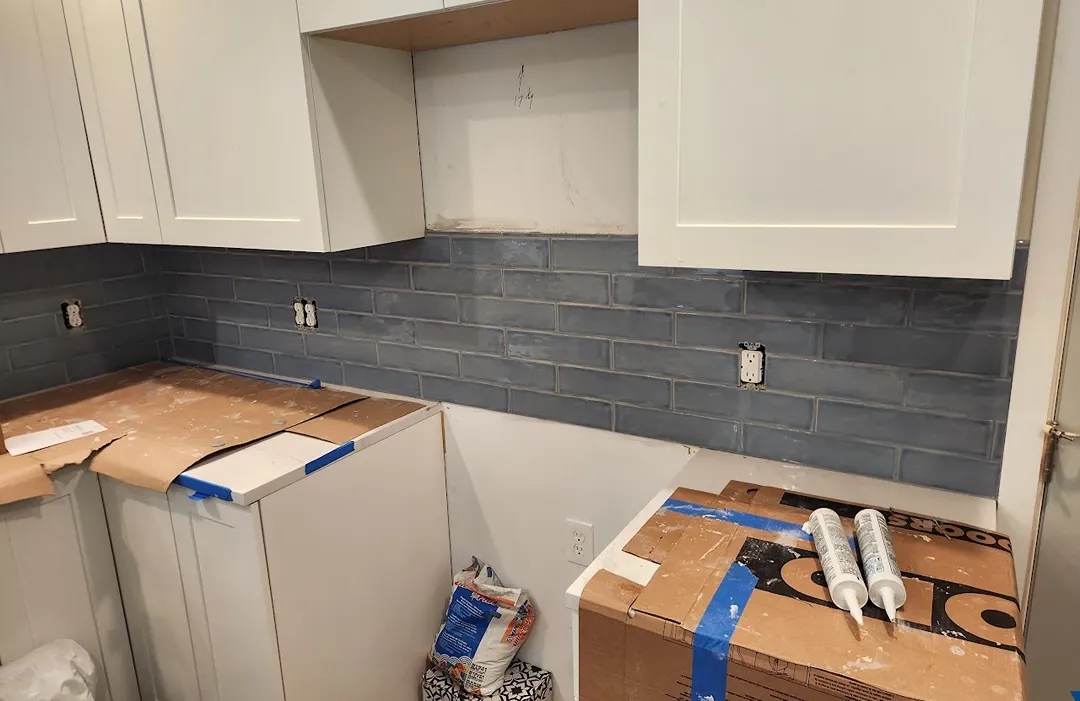
Indiana’s electrical rules are in the Indiana Electrical Code, 2009 Edition, which is based on the 2008 National Electrical Code. An update to the 2023 edition was proposed in 2026 but was not yet in force as of this writing. The model 2018 International Residential Code calls for countertop receptacles placed so that “no point along the wall line is more than 24 inches” from one, with ground-fault protection.
Above the range, the model code’s appliance section calls for “not less than 30 inches” of vertical clearance above the cooktop to unprotected combustible material, and for cooking appliances to be installed per the manufacturer’s instructions. Your local inspector has the final word on what applies.
Start with how you cook, then narrow by look.
For budget context, Harvard’s Joint Center for Housing Studies found U.S. kitchen remodels averaged $16,383 in 2023. Our guide to kitchen remodel costs in Lafayette shows where the backsplash fits in a local budget.
These are the questions Greater Lafayette homeowners ask most when they choose a backsplash. Each answer ties back to the sources above.
For low upkeep in a working kitchen, porcelain or glazed ceramic tile is hard to beat, especially with epoxy grout. The Tile Council of North America defines porcelain as tile that absorbs 0.5% or less water. Granite and quartzite resist most kitchen acids, while marble and limestone can etch.
Both work well. Porcelain is denser, absorbing 0.5% or less water, and the Porcelain Tile Certification Agency mark confirms it is true porcelain. Glazed ceramic relies on its glaze, which can be very durable. On a vertical backsplash, either is a practical choice, so appearance and budget often decide.
It is worth considering, especially behind the sink and stove. The Tile Council of North America says epoxy grout is virtually as stain proof as the tile, while cement grout is porous and benefits from sealer. Ask your installer about cost and color options, since epoxy removes the sealing step.
Yes, with realistic expectations. The Natural Stone Institute says lemon, vinegar and other acids can dull or etch calcareous stones like marble. Sealing makes it more stain resistant but not stain proof. Many homeowners accept some etching over time, or keep marble away from the main prep area.
Often, yes. Backsplash work usually means moving or adding outlets. The 2018 model residential code calls for countertop receptacles spaced so no point along the wall is more than 24 inches from one, with ground-fault protection. Indiana’s electrical code applies, and your local inspector decides.
Use an alkaline or neutral cleaner rather than an acidic one. The Tile Council of North America warns that cement grout is dissolved by acids like vinegar, and says to avoid oil or wax-based cleaners. Epoxy grout resists stains better, but spills should still be cleaned up promptly.
Learn more about our tile and flooring and kitchen remodeling in Greater Lafayette.
Ready to choose a backsplash you will still like in ten years? We will help you pick materials that fit how you cook, plan every outlet and clearance, and give you a clear scope of work and transparent pricing. No surprises, clear next steps.