
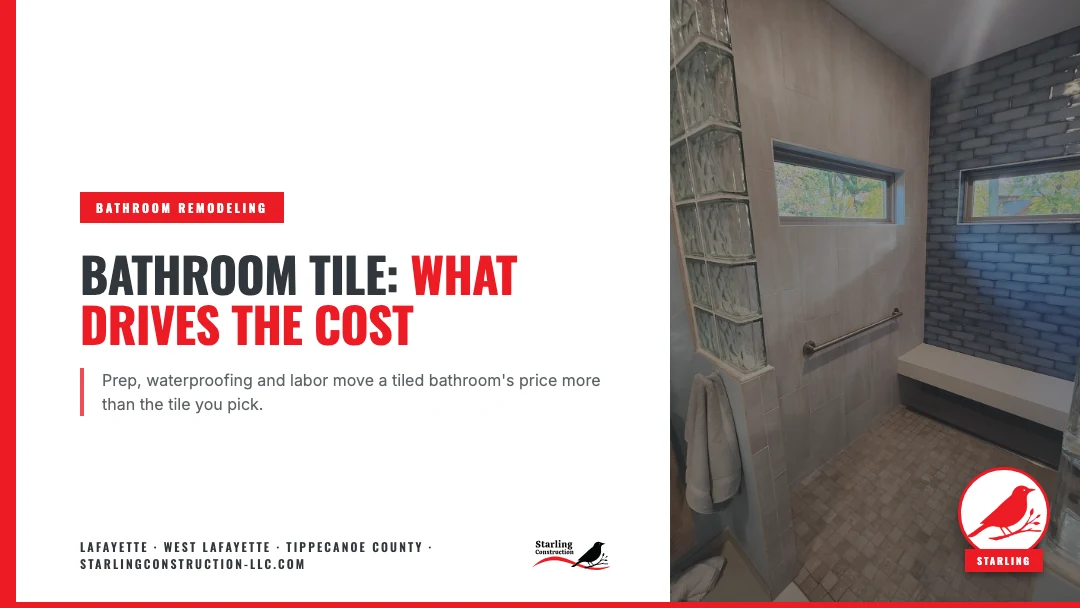
Quick answer: The tile you pick is rarely the biggest number on a tiled bathroom quote. Surface prep, waterproofing, layout and skilled labor carry most of the cost, so a budget tile and a premium tile in the same shower land closer together than most people expect. Choose porcelain for floors and wet areas, pick size and pattern with labor in mind, and treat slip resistance and grout as maintenance decisions.
Tile decisions in Lafayette and West Lafayette usually start in a showroom and end with a quote that surprises people. The friction is simple: tile is sold by the box, but a tiled bathroom is priced by everything around the box.
That gap shows up most in older Greater Lafayette homes, where a floor that looks fine to the eye can still be out of flat for larger tile. This guide covers the decisions that move your quote and the ones you will live with for years.
Want to know what your tile choice does to the real number? We walk the room, look at the floor and walls, and give you transparent pricing with options that fit the space.
A tile quote bundles far more than tile. Most of the money goes to layers you never see once the job is done.
In a shower, those hidden layers do the work. Fine Homebuilding’s 2021 guide to waterproofing tile showers puts it plainly: tile and grout are water-permeable, so the system behind them has to be completely waterproof. The backer, the membrane and the drain assembly are part of the job no matter which tile goes on top.
Floors carry their own hidden step. The Ceramic Tile Education Foundation’s guide to flatness for large format tile notes that installers have to provide a surface flat enough for the tile, and get paid for doing it. Patching and leveling a floor is time on the clock before the first tile is set.
Then comes layout. Every cut around a toilet flange, a vanity, a niche or an outlet is labor.
The practical result: upgrading the tile changes one line on the quote, while prep, waterproofing and installation stay roughly where they were. A sound base with a mid-priced tile will outlast a premium tile on a weak one. Once that is clear, the material choice gets simpler.
Porcelain and ceramic look alike on a showroom board. The real difference is how much water each one soaks up.
The Tile Council of North America’s porcelain certification page explains that standards define porcelain as an impervious tile with water absorption of 0.5% or less under the ASTM C373 test. The same page warns that some tile sold as porcelain does not meet that standard, which is why a certification program exists.
The difference comes from how the tile is made. Daltile’s July 2025 explainer on ceramic versus porcelain describes ceramic as fired at lower temperatures, which leaves it slightly more porous and softer, and easier to cut. Porcelain uses a finer clay fired much hotter, so it comes out denser, harder and less porous.
That maps cleanly onto a bathroom. Porcelain earns its place on the floor and in the shower, where water sits and feet land. Ceramic is a sensible, often less expensive pick for walls, backsplashes and accent areas outside the splash zone. Many good bathrooms use both.
Tile size and layout pattern can move your quote as much as the tile price does. Bigger tile asks for more prep, and a busier pattern asks for more cutting.
Large tile needs a flat base. The ANSI A108.02 standard quoted by the Ceramic Tile Education Foundation allows no more than 1/8 inch of variation in 10 feet, and no more than 1/16 inch in 2 feet, for tiles with any edge 15 inches or longer.
A June 2025 TileLetter article on large-format tile calls that a much tighter tolerance than the customary 1/4 inch in 10 feet. A floor that has moved over the years may need leveling to hit it.
Small mosaics go the other direction. They are a common pick for shower floors, but every small piece adds grout lines, and more grout means more setting, more cleanup and more joints to maintain.
Pattern is the other lever. Herringbone and diagonal layouts put an angled cut at every edge of the room, so they take longer to set and leave more offcut waste than a straight lay. A simple layout in a tile you love is often a better value than a complex one in a cheaper tile.
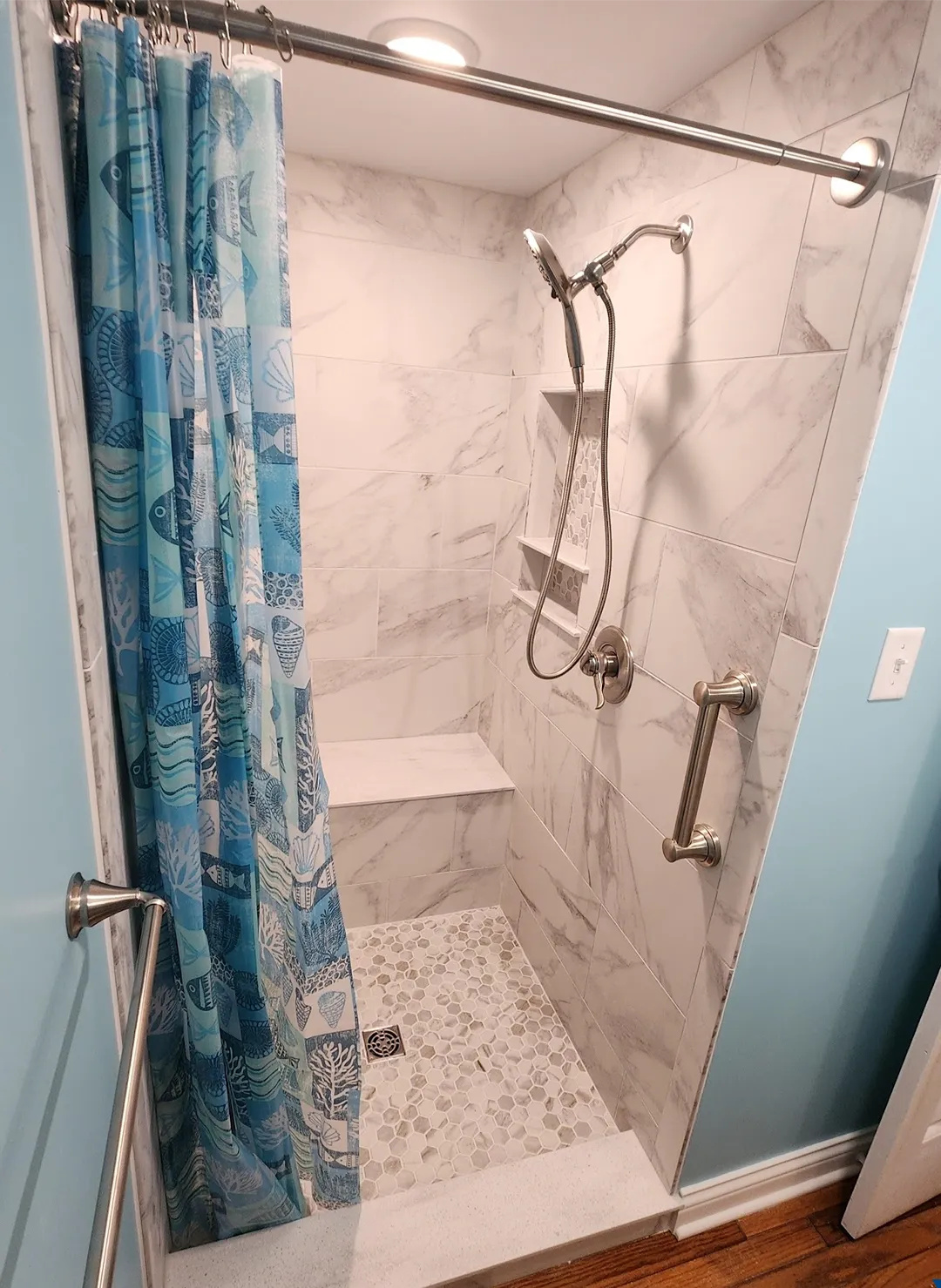
The choices that matter most three years from now are the least exciting ones in the showroom. How the floor grips when wet, and how the grout holds up, decide how the bathroom feels to use every day.
For slip resistance, look for the tile’s DCOF rating. A 2020 TileLetter answer from the National Tile Contractors Association quotes the ANSI A137.1 standard: it requires a minimum wet DCOF AcuTest value of 0.42 for tiles in level interior spaces expected to be walked on when wet. The same piece notes that different situations may call for a higher number.
That is why a polished floor tile deserves a second look in a bathroom. Ask for the rating, favor a matte or textured finish on the floor, and save high-gloss tile for the walls.
Grout is the other long-term call. Laticrete’s June 2025 guide to epoxy grout describes epoxy as highly stain-resistant and says it does not need the periodic sealing cement grout does. The tradeoffs it lists are a higher upfront cost and a shorter working time during installation.
Color is part of the same decision. Look at grout samples next to your actual tile, in bathroom light, because the grout shade changes how the whole floor reads once it is installed.
Not sure which tile and grout fit how you use your bathroom? Tell us who uses the room and how, and we will recommend options that hold up and look right in your space.
Heated floors are the one tile decision with a real Indiana angle. On a cold winter morning, a warm tile floor is an upgrade you feel every day, and it has to be planned before any tile goes down.
Tile is a natural partner for radiant heat. Why Tile’s 2021 guide to in-floor heating notes that ceramic tile is thin, conducts heat well, and is not affected by moisture or heat. The same guide lists bathrooms among the most popular rooms for in-floor radiant heating.
The planning question is build-up. Electric radiant heat uses cables or mats installed between the subfloor and the floor covering, per that same guide, so the system becomes part of the floor’s thickness. Every layer adds height, and that height has to meet the hallway floor, the door and the toilet cleanly.
Confirm how the heating system and tile setting materials work together, and check the finished height at every doorway during design, not after the floor is set.
Tile is one piece of a larger bathroom number. The scope of the whole room, not the tile alone, decides which budget tier you land in.
If you are still sizing the full project, our guide to what a bathroom remodel costs in Lafayette by tier lays out the ranges and what each tier includes. Use it to set the overall budget, then protect the layers underneath first and choose the best tile the rest allows.
When you are ready to see finished work, our project portfolio, including two West Lafayette bathroom remodels, shows how different tile choices come together in real rooms.
For the installation itself, our tile and flooring installation team handles floors, showers, tub surrounds and backsplashes across Central Indiana. If the tile is part of a bigger update, our bathroom remodeling services cover the full room.
These are the tile questions Lafayette and West Lafayette homeowners raise most when a bathroom quote lands.
For floors and showers, usually yes. Porcelain is defined by water absorption of 0.5% or less, so it is denser and less porous than ceramic. On walls outside the splash zone, ceramic performs well and often costs less. Many bathrooms use porcelain underfoot and ceramic on the walls to balance durability and budget.
Often, yes, because large tile needs a flatter base. The ANSI standard allows only 1/8 inch of variation in 10 feet for tile with an edge 15 inches or longer, so older floors may need leveling first. Large tile also takes more care to set, which adds labor even though there are fewer grout lines.
Look for a tile rated for wet interior floors. The ANSI A137.1 standard requires a wet DCOF of at least 0.42 for level interior spaces walked on when wet. Ask for the rating before you buy, favor a matte or textured finish underfoot, and keep high-gloss tile on the walls.
Because most of the cost sits underneath. Waterproofing, backer board, floor leveling, layout planning and skilled installation carry most of a tiled bathroom’s price. Tile and grout are water-permeable, so the waterproof system behind them is essential. Upgrading the tile changes one line on the quote, while prep and labor stay about the same.
It depends on the room and your budget. Epoxy grout is highly stain-resistant and does not need periodic sealing, but it costs more and has a shorter working time during installation. Cement grout costs less upfront but calls for periodic sealing. For a busy family bathroom floor, the easier upkeep of epoxy is often worth weighing.
Ready to pick tile with the real cost in front of you? We will walk your bathroom, explain what the floor and walls need, and give you a clear quote with no surprises and clear next steps.