
Compare bathroom remodel quotes line by line, not by the total. Confirm that each bid covers the same scope tier, then check the allowances for fixtures and tile, what each bid leaves out, how it handles hidden damage, who pulls the permit, and how payments line up with the work. Once the bids describe the same job, the price gap usually shrinks or explains itself.
Most Lafayette homeowners get more than one quote before a bathroom remodel, and most are surprised by how far apart the numbers land. One bid comes in thousands below another for what looks like the same room.
That gap is rarely about one contractor being honest and the other greedy. Far more often, the two quotes describe two different projects. This guide shows how to line them up so you are comparing the same job.
Holding a quote you want a second opinion on? We will walk your bathroom, scope it in writing, and show you exactly what is and is not included in our number.
Bathroom work sorts into three broad levels. A refresh keeps the layout and swaps surfaces and fixtures. A full remodel replaces nearly everything inside the same footprint. A primary suite changes the room itself, sometimes moving plumbing or borrowing space from a closet.
Two quotes can both say “bathroom remodel” and sit in different levels. One contractor may price a tub re-glaze and a new vanity, while another prices a tub-to-shower conversion with tile to the ceiling. Our bathroom remodel cost guide for Lafayette lays out what each level typically includes and costs.
Before you compare any numbers, write one sentence for each bid: what stays, what goes and what moves. If those sentences do not match, the prices will not either.
An allowance is a placeholder budget for something you have not picked yet, usually tile, a vanity, a faucet set or a shower door. It is a normal part of a bathroom quote, since few homeowners have chosen every finish before the first bid.
Allowances are also the easiest place for two quotes to drift apart. A low allowance makes the total look smaller, and the difference shows up later when the tile you actually want costs more than the placeholder.
Put the allowances from each bid side by side. If one quote allows a modest amount per square foot for tile and another allows far more, you are not looking at the same finished bathroom. Ask each contractor what their allowance buys at a local supplier, and plan your budget around the finishes you actually want.
The line items a quote does not mention matter as much as the ones it does. Bathroom bids differ most often on the pieces that sit around the main work:
| Item | Questions to ask |
|---|---|
| Demolition and haul-off | Is tear-out included, and is the debris removed or left for you? |
| Subfloor and wall repair | What happens if the subfloor or wall framing is soft once the old floor comes up? |
| Waterproofing | Is a waterproofing membrane included behind the shower tile? |
| Drywall, trim and paint | Are patched walls finished and painted, or left ready for paint? |
| Electrical and ventilation | Is the exhaust fan replaced and vented outside, and are outlets updated? |
| Permit and inspections | Who pulls the permit, and is the fee in the price? |
| Cleanup | Is final cleaning part of the job? |
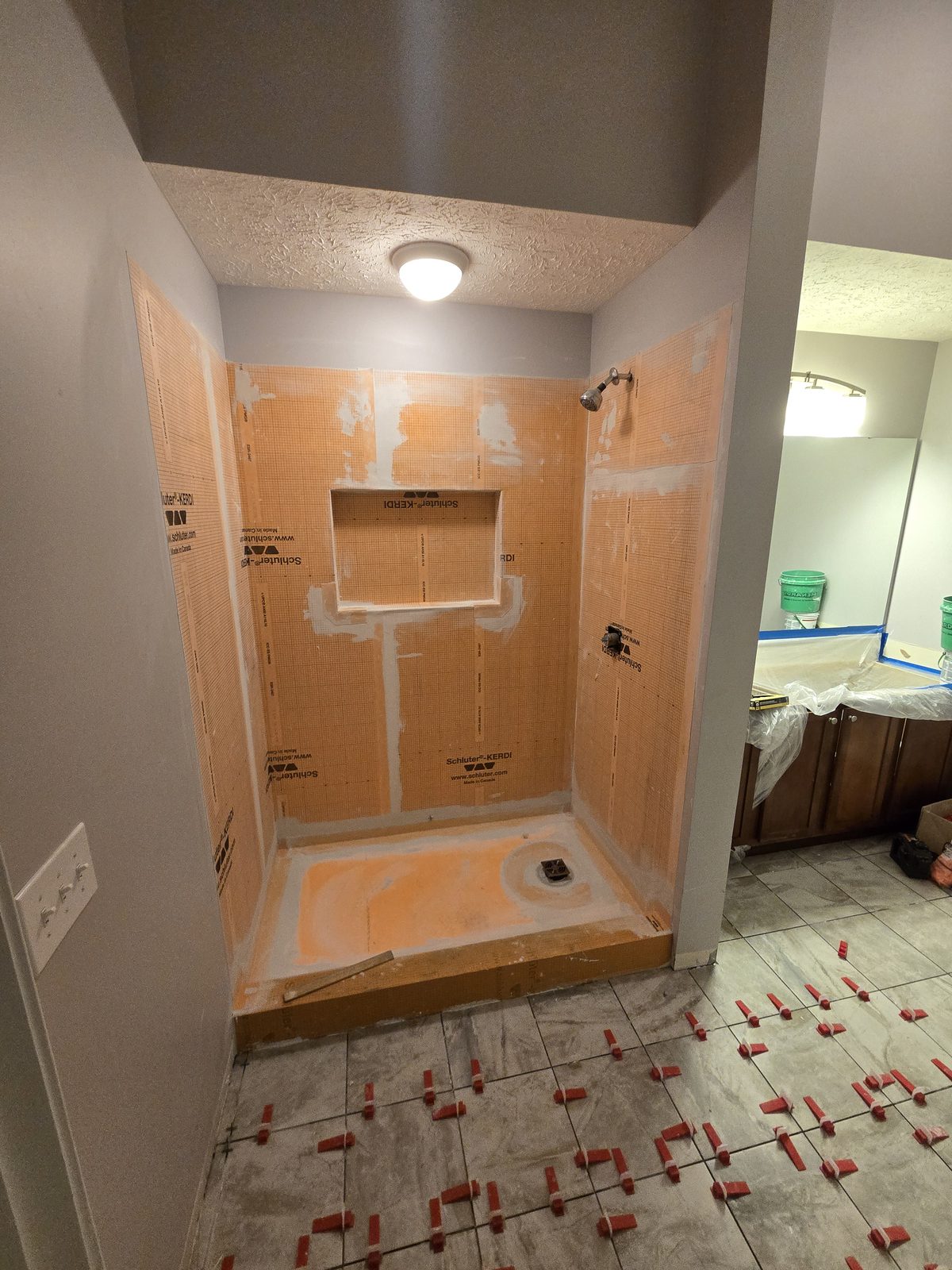
A quote that leaves these out is not necessarily wrong. It may simply expect you to handle them. Write the missing items onto the cheaper bid with a rough cost, and the comparison gets more honest fast.
Our guide to signs a cheap remodel hides costs covers the patterns that show up most often in low bids.
Older Lafayette and West Lafayette homes carry surprises behind bathroom walls: a soft subfloor around the toilet, galvanized supply lines or a cracked drain fitting. Nobody can see those until the old tile comes off.
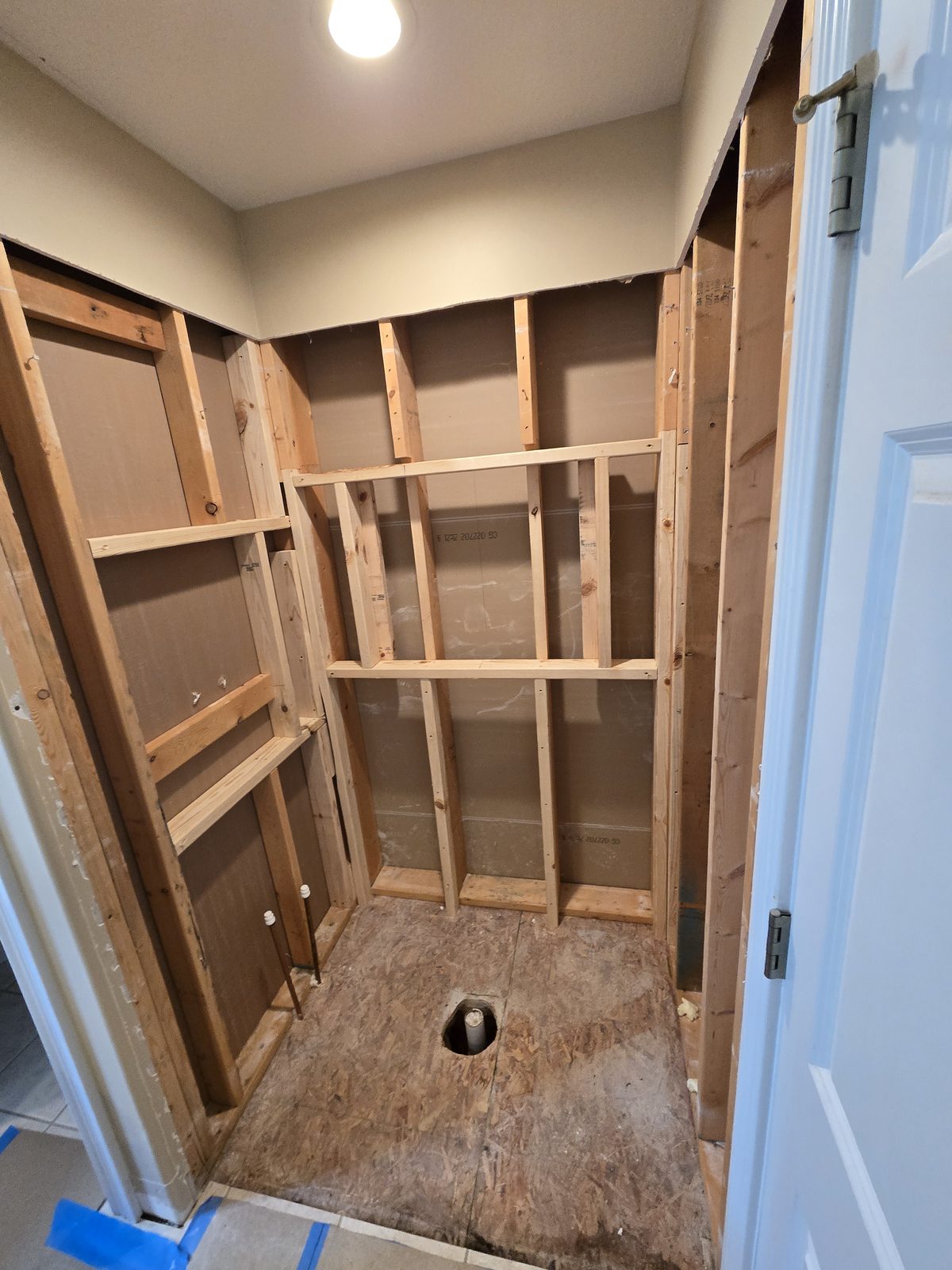
Contractors handle this in different ways. Some build a contingency line into the quote. Others price the visible work only and handle anything found behind the wall as a change order. Both can be fair, as long as you know which one you are holding.
Ask each contractor how they price hidden damage and how they will document it if they find some. A good answer includes photos before the repair and a written change order before the extra work starts. Our article on when a change order is normal and when it is a red flag walks through what a fair one looks like.
Want a quote that plans for an older home up front? We look for the usual trouble spots during the walkthrough and tell you how we will handle them before you sign.
Price is only one part of a quote. Three other lines tell you how the project will actually run.
Permit. Any bathroom work that moves plumbing, adds electrical or changes structure generally needs a permit, and Lafayette and West Lafayette each run their own building departments. Confirm who pulls it and if the fee is in the price. The FTC lists a contractor asking you to get the required permits yourself as one sign of a home improvement scam.
Payments. Look at how much is due before work starts and how later payments are triggered. Payments tied to finished milestones, such as rough-in complete or tile complete, protect you better than payments tied to dates.
Schedule. Compare start dates, the expected number of working days and any long-lead items like custom glass or special-order tile. A bid that starts sooner is only faster if the materials will be there when the crew is.
Once both quotes describe the same scope with the same allowances and the missing items written in, compare the totals again. The gap is usually smaller, and what is left often has a clear reason: different tile installation methods, a different shower system or a different level of finish work.
If the gap is still large, ask each contractor to walk you through it. A remodeler who knows their numbers can explain where the money goes, line by line. A remodeler who cannot explain their own quote is telling you something too.
The Federal Trade Commission gives the same advice in its guide to avoiding home improvement scams: get multiple estimates, do not automatically choose the lowest bidder, and ask for an explanation if there is a big difference among them.
For more on vetting the company behind the number, see our guide to choosing a remodeler in Lafayette.
These are the questions Lafayette and West Lafayette homeowners ask us most when they are holding more than one bid.
Two or three is usually enough to see the range, as long as each contractor is pricing the same scope. More quotes than that rarely add clarity unless the first few describe very different projects.
The usual reasons are a smaller scope, lower allowances for tile and fixtures, or items left out such as haul-off, subfloor repair, waterproofing or paint. Line the bids up item by item before deciding the cheaper one is the better deal.
An allowance is a placeholder budget for a finish you have not chosen yet, such as tile, a vanity, or a faucet. If your final pick costs more than the allowance, the difference is added to the price, so compare allowances across bids.
It depends on the contractor. Some build a contingency into the quote, especially for older homes, while others handle hidden damage through written change orders. Either approach can be fair if the quote says clearly which one it uses.
In most cases the contractor doing the work should pull it. Ask each bidder if the permit and its fee are included, since Lafayette and West Lafayette each run their own building departments.
Yes. A clear explanation of where the money goes is one of the best signs that a remodeler has priced the job carefully. Ask about any line you do not understand before you sign.
Ready for a quote you can compare line by line? We will walk your space, scope it in writing, and show you what is included before you decide.